Last year, Art for the Journey joined a community of 167 organizations from around the world that are bringing generations together to reduce social isolation and loneliness.
Now, a powerful new report from CoGenerate captures the collective insights from this group along with dozens of other leaders and experts working in this space. Instead of getting stuck in the problem, it’s all about solutions – what’s working, why, and what’s needed moving forward.
Check out Can Intergenerational Connection Heal Us? and share with anyone you think might be interested! https://cogenerate.org/loneliness/
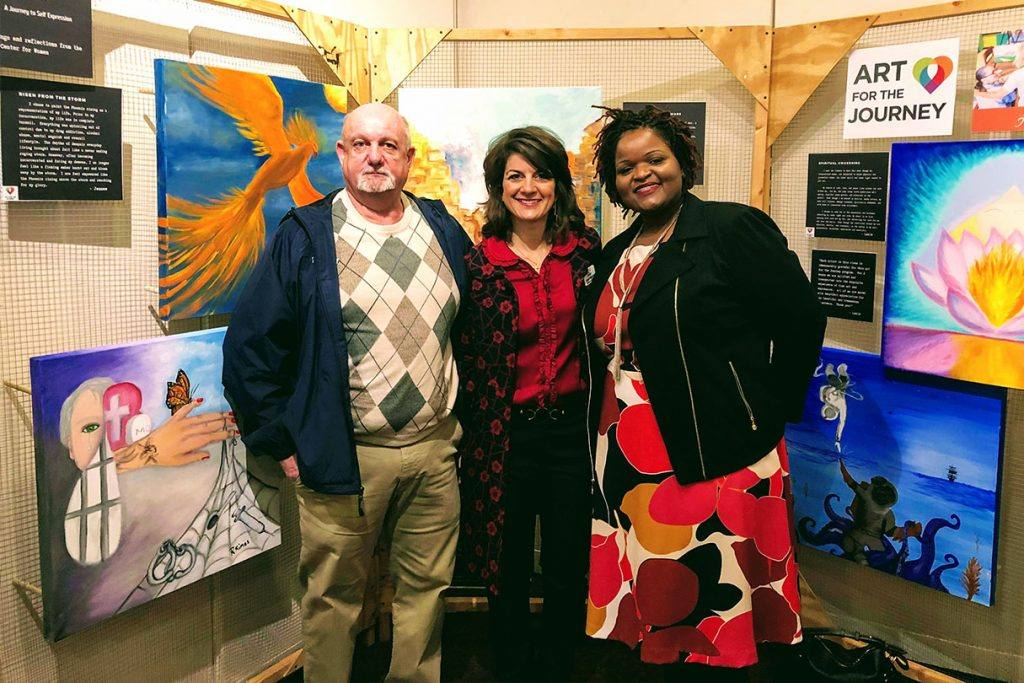
Art for the Journey was honored to participate in this discussion along with a cohort of creative solution makers from across the US. We believe the work we do here in Richmond, Virginia, “transforming lives through art and community” is successful in-part by using person-centered and intergenerational approaches. As Master trainers for the OMA program, we have been greatly inspired by the pillars that make this evidence based program a success. Art for the Journey promotes healing and well-being through art, community togetherness, and in many programs employ an intergenerational approach.
Besides the positive emotion we witness through specifically designed art programs engaging people of all ages (from five to 105!) harnessing the power of creative expression and art-making, we also witness first hand, the conversations, laughter and the joyful social connection which is part of the magic of this work.
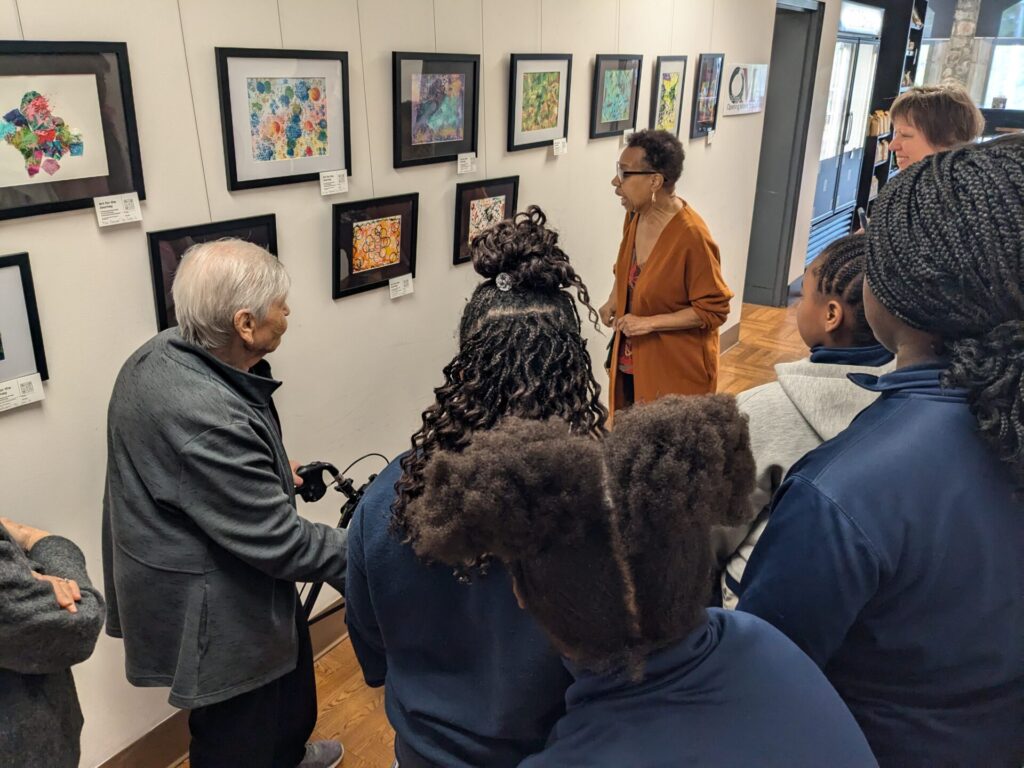
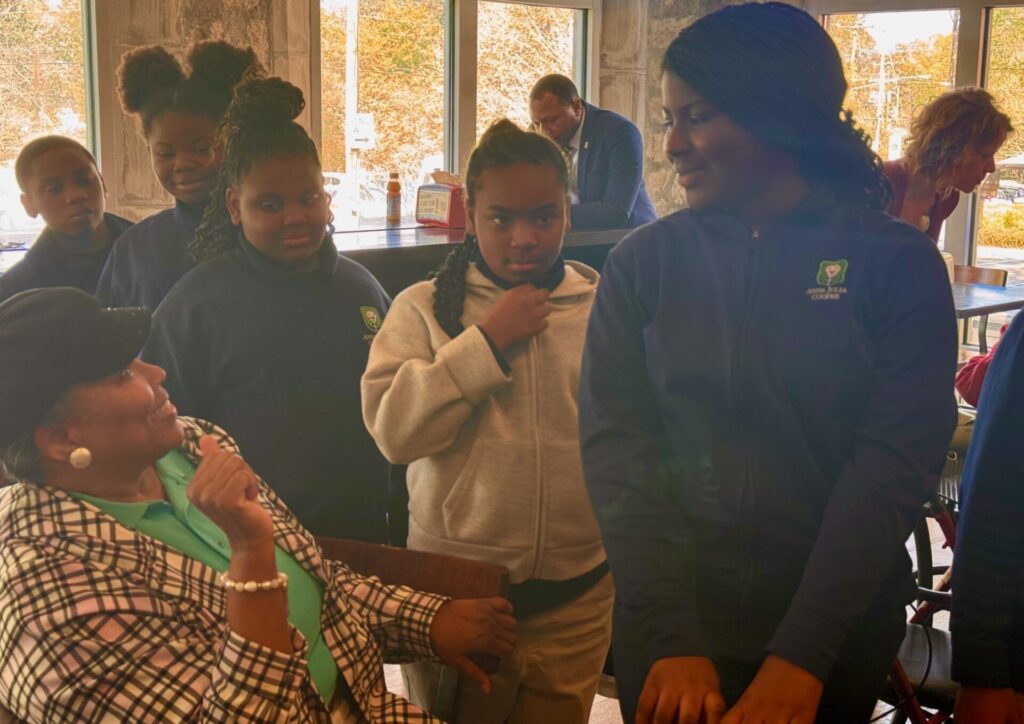
An Intergenerational Exhibit was hosted this month, April 2025, at Saint Stephen’s Church in Richmond, Virginia. The art exhibition and reception showcased art by fourth grade students from the Anna Julia Cooper School art program as well as art by residents living in Marywood Senior apartments. The art showcased voices and beautiful creative works by all, but the artists’ conversations were very special too!
How is Art for the Journey addressing social isolation through art?
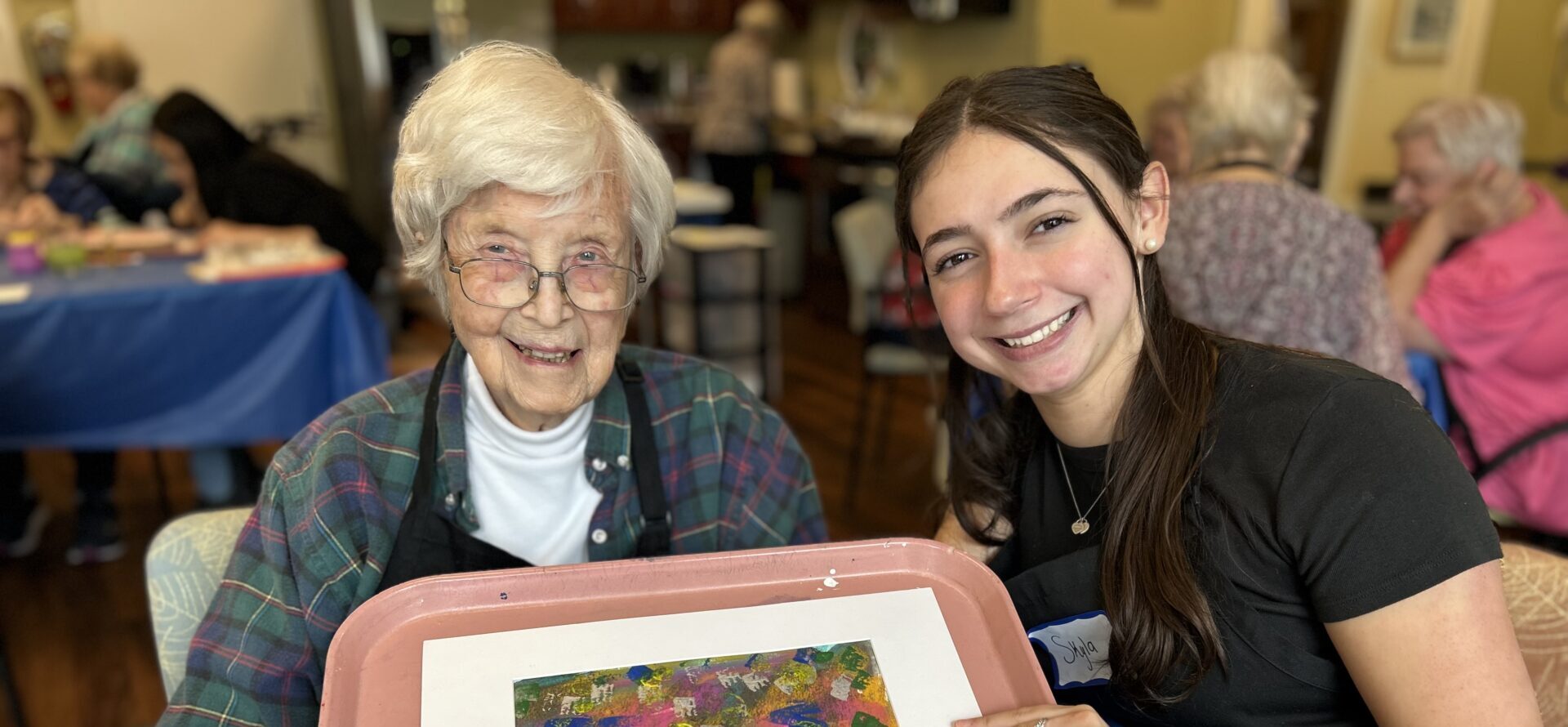
As long time “OMA” Facilitators, and Master trainers, we have witnessed and reported the compelling impact of the “Opening Minds through Art” (OMA) program designed in 2010 by Dr. Elizabeth Lokon at the Scripps Gerontology Center- Miami University, Ohio. This person-centered failure-free abstract art program uses intergenerational programming pairing college age students with elders living with dementia, and the art is what brings them together, however the friendships formed is the magic in the mix. The mood witnessed and data collected prove that this non-pharmacologic approach works!
Art for the Journey works with a variety of need based groups. Our goal is to expand the overwhelmingly positive impact of OMA to reach additional populations who can benefit, such as people living with Parkinson’s disease, or Cancer, or Combat related P.T.S.D., or addiction, people with long term hospital stays, low income seniors, or simply the negative effects of social isolation.
During the past year, Art for the Journey gathered MBA Capstone researchers from University of Richmond, as well as a VCU Occupational Therapy Doctoral researcher, and a steering committee of health care professionals from around the state of Virginia to help us design a program adaptation to expand impact of the Scripps OMA program in order to provide greater impact to more individuals using art and intergenerational connection. This effort was directly inspired by the need to address the negative effects of social isolation and loneliness using art and togetherness programming. The adaptation of OMA is underway with an aligned program name: “Elevating Lives through Art” (ELA), which is in testing stages today and will be offered more readily on completion our research phase.
A wonderful resource in helping us understand the need for such programming is the book, “Project Unlonely, Healing our Crisis of Disconnection” written by Dr. Jeremy Nobel. Additionally, an insightful interview by CoGenerate’s Marci Alboner with Dr. Nobel describes why the topic is important, how we can reframe our perception of “loneliness” as a signal (like thirst is to the need to drink water), rather than a medical condition. to take steps to address our times of loneliness such as creating or engaging in the arts!
It has been reported that suicide rates are going up, addiction rates are going up, overdose deaths are on the rise. Dr. Nobel suggests that loneliness may lead to these numbers increasing, and at the same time is probably the strongest preventable risk factor for suicidality and addiction.
Dr. Nobel describes loneliness as the sense you don’t have the connections you want, and is actually something we almost all experience from time to time. Moreover, this feeling is a most human of feelings and comes and goes for many of us. He suggests that we need to be on guard for when a person doesn’t have the ability to recognize and respond to these feelings effectively, possibly leading to a spiraling out of control. When that happens, we become more withdrawn from social experiences, and we might act a little more avoidant of people. Perhaps people notice this, and they respond by “giving the person some space.” That response actually feeds a cycle, the loneliness intensifies, in which a person experiencing it starts seeing threats and risk everywhere, explaining we know this from psychology experiments from the 2000’s.
Dr. Nobel states that there is a BIG BUBLIC HEALTH OPPORTUNITY to avoid this spiraling, and address loneliness through re-training our perception of loneliness. Moreover, we can take steps like creating art, writing poetry, visiting and participating in the arts as a means to connection, and positive brain health. By taking steps like participating in the arts, Dr. Nobel explains the positive effects of these activities on our brain chemistry, as this can actually change how the brain operates by changing cortisol levels, supporting our levels of seratonin, dopamine, and oxytocin.
Some even say…art heals.
View the wonderful interview below.
Thank you, Dr. Nobel for your insightful work, and CoGenerate for allowing Art for the Journey to participate in this inspirational report!